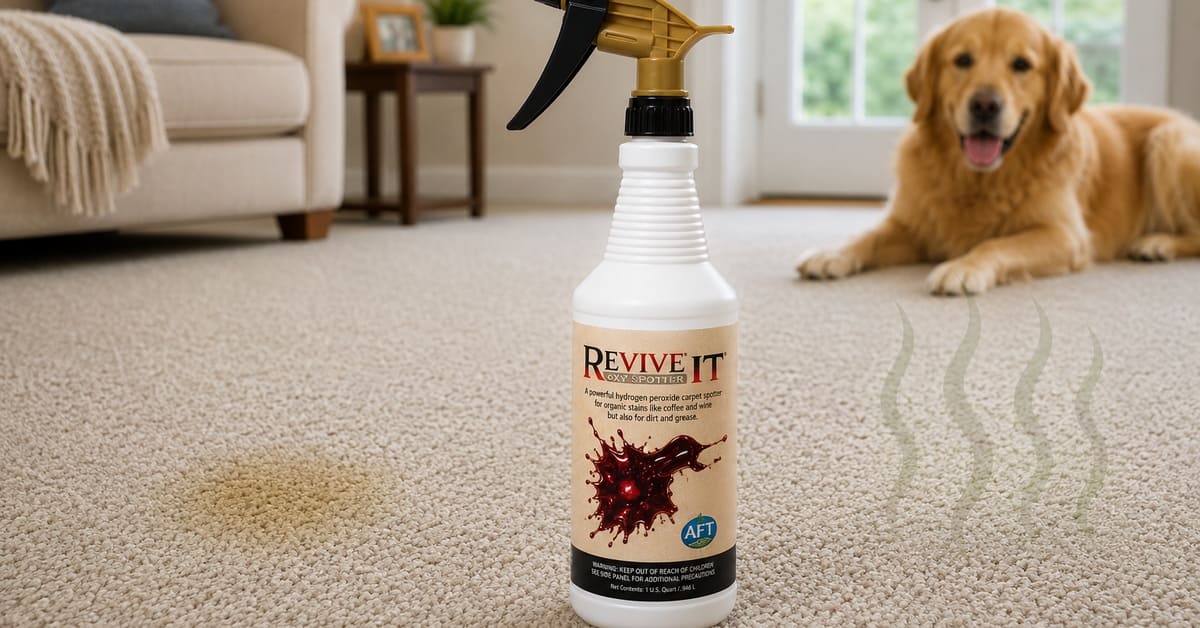
Most urine calls get treated as one problem, but they’re usually two: a visible stain and a lingering smell, and they don’t always show up together. Treat a stain-only job like it’s an odor job, or the other way around, and you’ll either waste product on a problem that isn’t there or walk away from a job that still isn’t actually fixed.
Figuring out which one you’re looking at first is what separates a clean result from a callback a week later.
Urine Stain vs. Odor: Two Different Problems, Two Different Fixes
A stain is what you can see — discoloration left behind in the fiber from the pigment and protein in urine and soil attracting residue. An odor is what you can smell, and it often comes from contamination that’s worked its way past the fiber into the backing or pad, where a surface treatment can’t reach it. You can have a visible stain with barely any smell, or a strong smell with no visible mark at all yet. Knowing which one is actually in front of you decides what you reach for first.
When It’s a Stain Without Much of an Odor
If the spot is visible but there’s little to no smell, you’re likely dealing with surface-level contamination that hasn’t had time to soak deep or hasn’t reached the backing. This is where Revive iT Oxy Spotter does the work. It’s built around SSHP — a stabilized hydrogen peroxide that stays inactive until it contacts a real soil or bacteria load, so it targets the actual stain instead of just sitting on the surface. Apply it directly, let it dwell, and it handles organic stains like urine, coffee, and wine the same way. It works as a stand-alone low-moisture spotter or alongside any other cleaning method you’re already running.
When It’s an Odor Without a Visible Stain
If there’s a smell but nothing to see, the contamination has likely gone deeper than the surface — into the pad, backing, or subfloor — which is a different chemistry problem than a stain sitting in the fiber. That’s enzymatic and odor-neutralizing territory, not a spotter’s job. For the full breakdown of how to handle odor-only contamination, see The Best Professional Urine Odor Remover for Carpet Cleaning.
When You’re Dealing With Both at Once
Most real jobs land here — a visible stain and a smell that doesn’t fully go away after a standard clean. Treat the stain first with Oxy Spotter, since a visible spot is the easier problem to confirm you’ve actually solved. Once the stain is gone, do a proper smell test on a dry carpet, not a wet one — moisture can mask odor that comes right back once everything dries. If the smell is still there after drying, that’s your sign the contamination reached the backing or pad, and it’s time to bring in an odor-specific product rather than reapplying more spotter to a stain that’s already gone.
On older or heavily contaminated carpet, sometimes neither step is enough on its own, and the honest answer is that extraction may be doing more of the real work than a low-moisture pass can. Don’t chase a smell with more spotter once the visible stain is already handled — you’ll burn through product without fixing what’s actually causing it.
Frequently Asked Questions
Can Oxy Spotter get rid of urine odor, not just the stain?
It can help with mild odor tied to fresh, surface-level contamination, but it’s built and tested as a stain remover. For odor that’s reached the backing or pad, an enzymatic or zinc-based odor product is the better tool for the job.
Why does the smell come back after the stain looks gone?
Because the stain and the odor source aren’t always in the same place. A spotter can lift the visible pigment from the fiber while contamination deeper in the backing or pad keeps producing smell — which is exactly why a dry smell test matters before you call a job finished.
Is it possible to have a strong odor with no visible stain at all?
Yes. Old or diluted urine contamination can soak into the pad or subfloor without ever leaving a visible mark on the fiber, which is why relying on sight alone to judge a urine job can miss the real problem.
Should you always treat the stain before the odor?
In most cases, yes. The stain is the easier problem to visually confirm as solved, so clearing it first tells you whether what’s left is purely an odor issue that needs a different product.
Diagnose Before You Treat
A urine stain vs odor problem isn’t solved by reaching for whatever’s already in your spotter bag — it’s solved by figuring out which one you’re actually looking at first. For visible stains, Revive iT Oxy Spotter gets the job done fast without wasting product on a problem you don’t have.