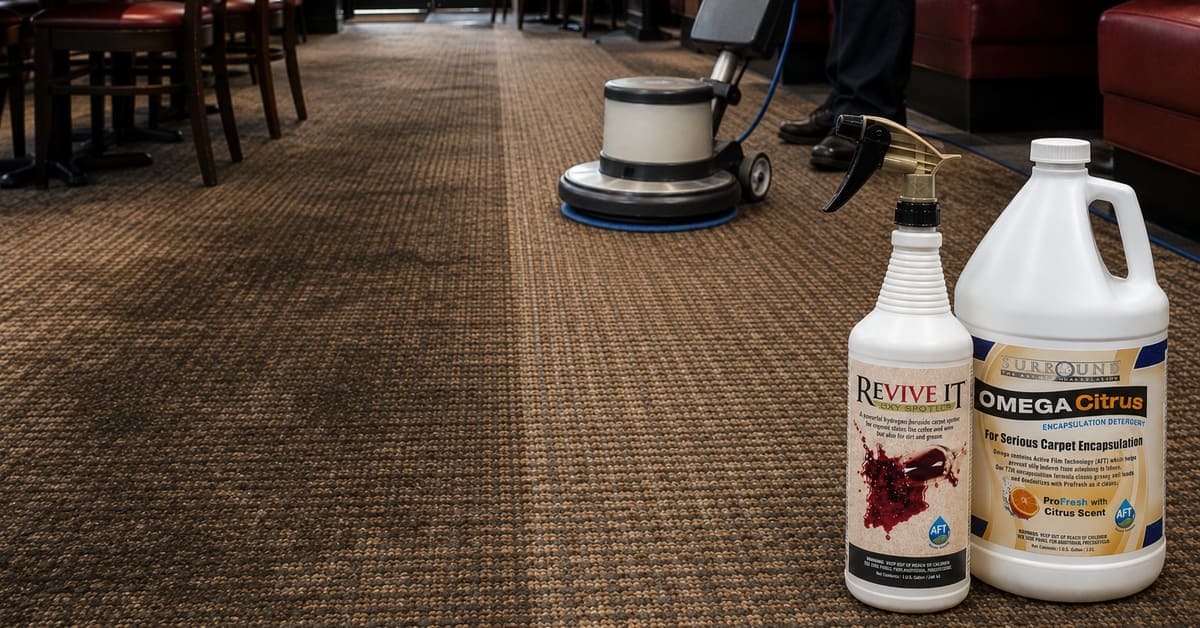
A client calls because the main hallway or the path in front of the counter looks noticeably darker than the rest of the carpet, even though the whole floor was cleaned not long ago. You run your usual process, and the lane comes back only marginally lighter. That’s the moment a lot of technicians reach for more product or a second identical pass — and get the same disappointing result, because the problem was never about product volume. It’s about soil that’s been ground in deep enough that a standard clean can’t fully reach it.
Getting dark traffic lanes out calls for a different approach than routine maintenance cleaning, and it’s worth treating it as its own job rather than an extension of the same process you’d run on the rest of the floor.
Getting Dark Traffic Lanes Out: Why Standard Cleaning Falls Short
A traffic lane doesn’t get dark overnight. Months or years of foot traffic grind soil, body oils, and airborne grime into the base of the fiber, well past where a light surface pass reaches. By the time a lane is visibly darker than the surrounding carpet, that soil load isn’t sitting on top of the fiber waiting to be lifted — it’s bonded into it. A cleaning pass built for routine maintenance soil simply doesn’t have the dwell time or mechanical action to break that down.
This is a different problem than re-soiling. Re-soiling is carpet that gets dirty again quickly after a clean. A dark traffic lane is carpet that never fully came clean in the first place, because the soil load has outpaced what a standard process was designed to remove.
Pre-Treat the Lane Before You Clean It
Don’t run your main cleaning pass on a dark lane without pre-treating it first. Apply Revive iT Oxy Spotter directly to the darkest sections and give it real dwell time before your main pass. It’s built around SSHP — a stabilized hydrogen peroxide that stays inactive until it contacts a genuine soil load, so it goes to work specifically on the embedded soil rather than reacting on contact. That head start is what makes the difference between a lane that lightens slightly and one that actually comes clean.
Choosing the Right Chemical Strength for the Job
A traffic lane with real soil buildup needs a stronger encapsulation detergent than a routine maintenance pass calls for. Surround Omega Citrus is built for exactly this kind of heavily soiled commercial environment — its T2H hybrid polymer system is formulated to break down heavier grease and organic buildup without leaving the crystallizing dust or crunchy carpet feel that a lighter formula can leave behind when it’s pushed past its intended soil range. A neutral pH in the 6.5 to 7.5 range also means you’re not risking fiber damage by using a harsher product to compensate for the soil load.
Give It More Time and More Agitation Than Usual
Whatever method you’re running — bonnet, low-moisture, or extraction — a dark traffic lane needs more dwell time and more mechanical agitation than the rest of the floor. A single quick pass with the same pad or brush you’d use elsewhere won’t move enough embedded soil. Work the lane in sections, switch to a fresh bonnet or pad partway through if the one you’re using is already loaded with soil, and don’t be afraid to run a second full pass specifically on the lane after the rest of the room is done. For extreme build up extraction followed by bonnet cleaning may be required.
When a Lane Won’t Come Fully Clean in One Visit
Be upfront with the client when a lane has years of buildup behind it. Some darkening in a heavily worn traffic path is fiber wear and permanent color change from crushed pile catching light differently, not soil — and no amount of chemistry or agitation fixes that abrasion damage. Getting a badly neglected lane back to a presentable state sometimes takes more than one visit, with the first visit breaking down the bulk of the embedded soil and a follow-up finishing the job. Setting that expectation up front protects you from a client who expects one pass to erase years of traffic.
Frequently Asked Questions
Why does a traffic lane stay dark after a full carpet cleaning?
Because the soil load in a heavily walked lane is ground in deeper than a standard cleaning pass is built to reach. It needs pre-treatment and extra dwell time, not just another identical pass.
Should you pre-treat dark traffic lanes every time you clean them?
If the lane is noticeably darker than the surrounding carpet, yes. Pre-treating gives the chemistry time to work on embedded soil before your main pass, rather than asking one step to do both jobs at once.
Can a dark traffic lane ever be permanently darker than the rest of the carpet?
Yes. Once fiber has been crushed or worn down by heavy foot traffic over time, some of that darkening is a light-reflection and wear issue rather than soil, and it won’t fully reverse with cleaning.
How is this different from preventing high traffic areas from re-soiling?
Getting a dark lane clean is about removing soil that’s already embedded. Preventing re-soiling is about what happens after that — keeping the lane from darkening again as quickly once it’s clean. For that side of the process, see How to Prevent High Traffic Carpet Re-Soiling.
Getting the Lane Clean Is the First Step
Getting dark traffic lanes out takes a different process than routine maintenance cleaning — pre-treatment, a stronger encapsulation detergent built for heavy soil, and more dwell time and agitation than the rest of the floor gets. Revive iT Oxy Spotter and Surround Omega Citrus are built for that combination. Once the lane is actually clean, the re-soiling prevention chemistry is what keeps it looking that way between services.