Knowing how to wash a bonnet properly is one of those small habits that quietly affects every job after it. A bonnet that’s rinsed out wrong or just tossed in with everything else in the wash starts holding onto soil, grease,bacteria, and detergent residue instead of releasing it — and that shows up on your next carpet, not just in your laundry room.
It doesn’t take a complicated routine to get this right. It just takes the right detergent and a few habits that keep your bonnets performing like new ones instead of quietly wearing out from the inside.
How to Wash a Bonnet the Right Way
Start by shaking or knocking loose any dry soil before the bonnet goes in the wash — this keeps grit from grinding into the fibers during the cycle instead of just rinsing away. From there, wash with a detergent built for the job. A standard laundry detergent isn’t formulated to cut through the oils, grease, and embedded soil a bonnet picks up on commercial and residential jobs, which is exactly why Bonnet Wash exists.
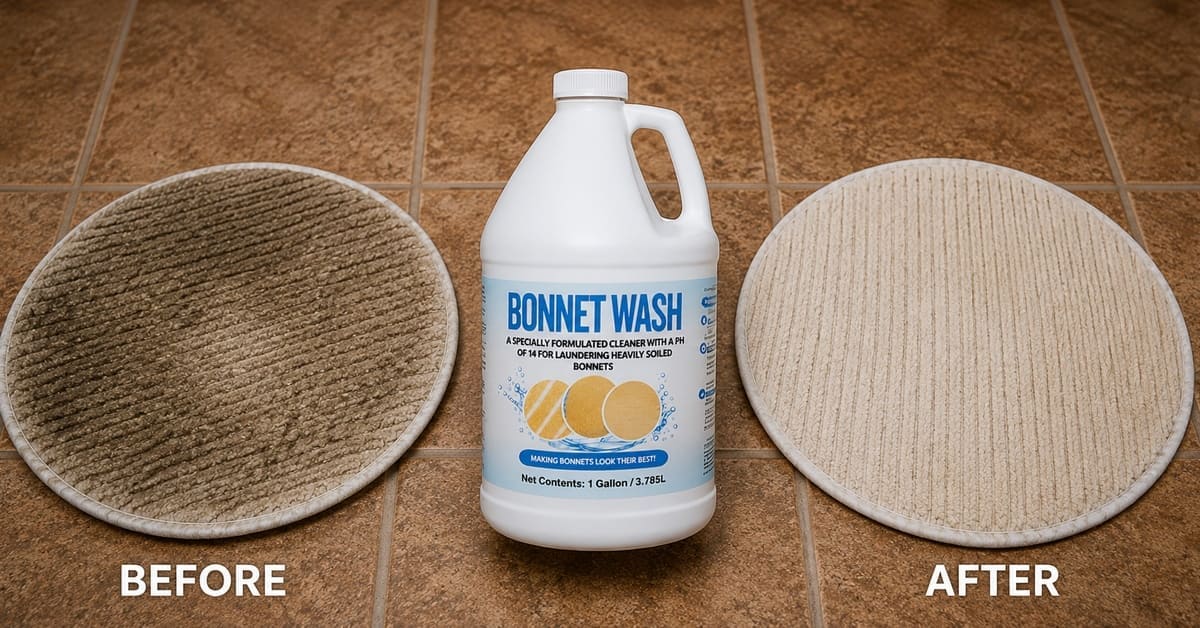
Bonnet Wash is a triple-strength detergent built specifically for restoring heavily soiled bonnets. It works in a regular washer, doesn’t take much per load, and rinses clean without leaving residue behind that could transfer onto the next carpet you clean. For bonnets that come off an especially dirty job, presoak them in Bonnet Wash combined with OxyAll before running a full cycle — that extra soak time gives the detergent a head start on soil that’s had time to set.
Don’t Skip the Rinse
A bonnet that isn’t fully rinsed will feel clean but still carry detergent residue, and that residue transfers straight onto the next carpet you use it on. Bonnet Wash is formulated to rinse out fast, but it still matters to run a full rinse cycle rather than a quick one, especially if you’re washing a full load of heavily soiled bonnets at once.
Caring for Cotton vs. Synthetic Bonnets
IronMan Cotton bonnets hold up well to this kind of washing and are the more common choice for a reason — they absorb well and give you the friction that helps lift soil off the carpet in the first place. Bonnet Wash is built to handle cotton and most synthetic bonnet materials, but if you’re running a mixed fleet, it’s worth washing your synthetic bonnets separately from cotton ones so you’re not guessing at how each one is holding up.
Fabric softener can be used for clothing and sheets but is not required for bonnets.
How Often Should You Wash Your Bonnets?
Wash bonnets after every job where they’ve picked up visible soil, not just when they look too dirty to use again. Letting soil dry and sit in the fibers between washes makes it harder to fully remove later, and a bonnet that’s carrying old, dried-in soil won’t clean as well on the next carpet even if it looks presentable. If you’re running several jobs a day, keep enough clean bonnets in rotation so you’re never tempted to skip a wash to save time.
Bonnet Wash Also Covers Your Other Cleaning Textiles
Bonnet Wash isn’t limited to bonnets — it’s just as useful for shop towels, microfiber cloths, and other service rags that pick up the same kind of grease and soil on the job. Keeping all of it in the same wash routine means your whole kit stays ready instead of just your bonnets. You can find full label directions and order information on the Bonnet Wash page.
According to the IICRC, the industry’s standards-setting body, maintaining clean, well-functioning equipment and cleaning materials is part of what separates a consistent professional result from a job that just looks clean at first glance — and that includes the bonnets doing the actual soil removal.
Frequently Asked Questions
Can you wash bonnets in a regular washing machine?
Yes. Bonnet Wash is designed to work in a standard washer, whether it’s a front-loader or top-loader, without needing special equipment.
How do you get heavily soiled bonnets clean?
Presoak them in Bonnet Wash combined with OxyAll before running a full wash cycle. The extra soak time helps break down soil that’s had time to dry and set into the fibers. Fill a 5 gallon bucket with 2 gallons of hot water. Add 6 oz od Bonnet Wash and 1 cup of Oxy All. OmegaZyme can also be added if needed for heavy restaurant grease. Place 4 to bonnets in the solution/bucket. Fill the remainder of empty space with hot water, cover to keep in the heat and let sit overnight. Then wash as you normally would.
Is it okay to use regular laundry detergent on bonnets?
You can, but it won’t cut through embedded grease and soil the way a detergent built for the job will, and it’s more likely to leave residue behind that transfers onto the next carpet.
How do you know when a bonnet needs to be replaced instead of washed?
If a bonnet has thinned out, lost its texture, or stopped picking up soil the way it used to even after a proper wash, it’s reached the end of its useful life. For more on tracking wear over time, see What Shape Are Your Bonnets In?.
Keep Your Bonnets Working as Hard as You Do
Knowing how to wash a bonnet properly is a small routine that protects a bigger investment — your results on every job after it. A few consistent habits and the right detergent keep your bonnets performing like new ones instead of quietly losing their edge. For a refresher on getting the most out of the bonnet cleaning method itself, see Bonnet Cleaning Procedure.