
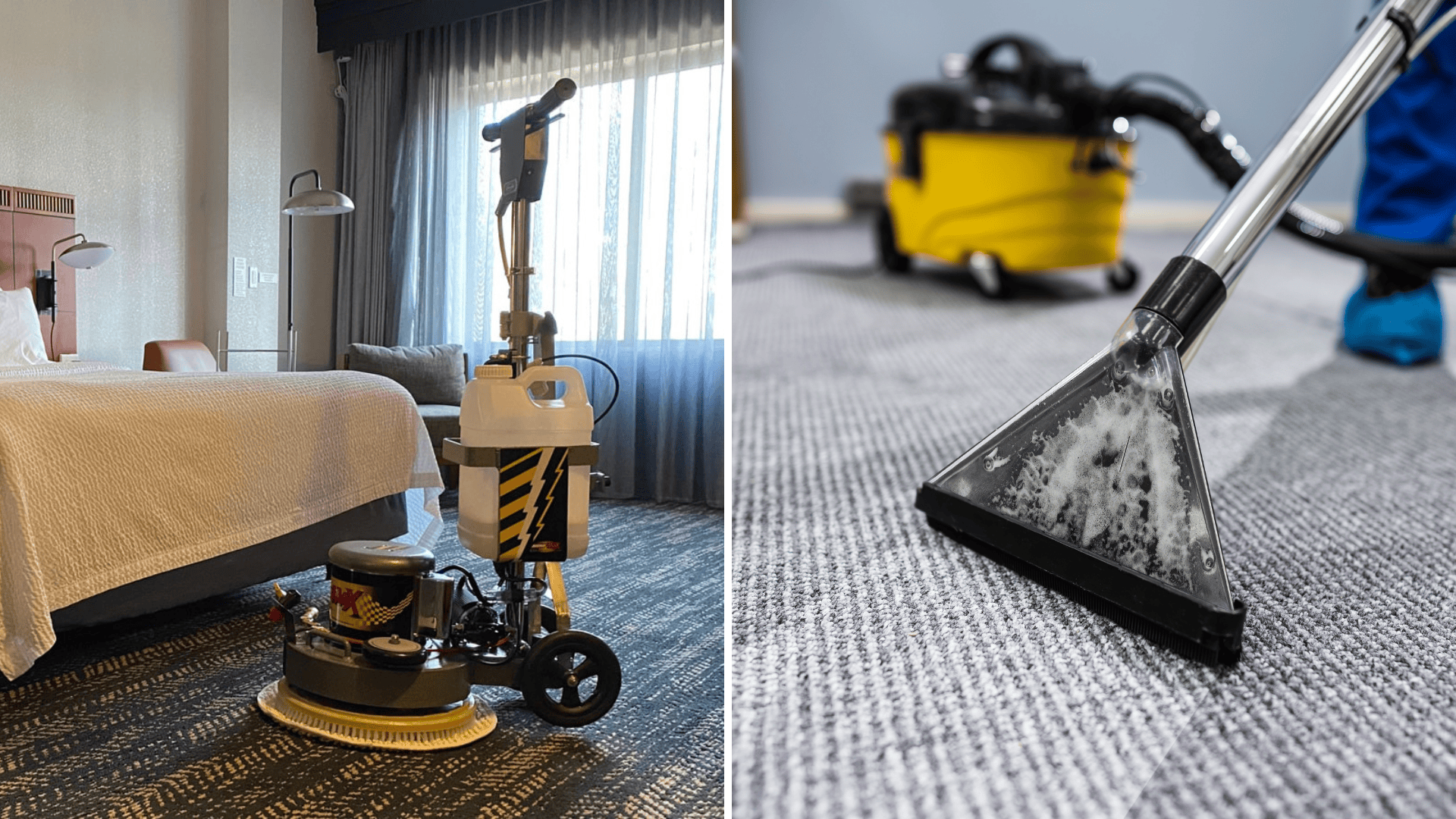
For professional carpet cleaners, the conversation around encapsulation carpet cleaning vs extraction isn't about which method is "better" in general. It's about which method performs better under specific commercial conditions, over repeated cleanings, without creating downstream issues like residue buildup, wicking, or accelerated re-soiling. Not to mention what many cleaners forget, job profit. The speed of the cleaning is also very important.
Both methods work. You already know that. The real question is how each method behaves over time — especially when carpet is cleaned repeatedly as part of an ongoing maintenance program rather than a one-time corrective service.
That's where method selection starts to matter.
Encapsulation Carpet Cleaning vs Extraction: When Each Method Actually Performs Better
A more useful way to look at encapsulation carpet cleaning vs extraction is in terms of control, not methodology.
Hot water extraction (HWE) delivers immediate, visible results. In heavily impacted carpet, hot water extraction does what it's designed to do: flush soil out of the fiber and reset the surface. That's why it remains an essential tool for restorative work and periodic deep cleaning.
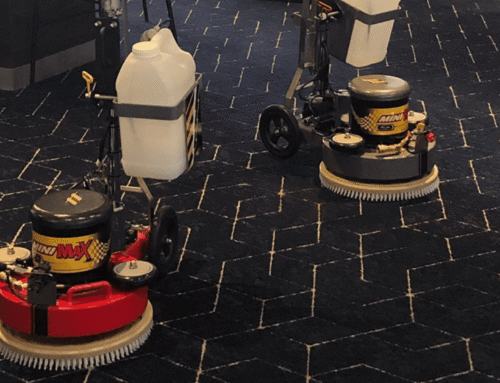
Encapsulation, by contrast, is designed for stability. It's built to manage soil in environments where carpet stays in use day after day. Instead of relying on volume and rinsing, encapsulation uses chemistry and mechanical action to suspend soil and control residue as the carpet dries.
In commercial spaces cleaned multiple times per year, that difference becomes more noticeable after the first few service cycles.
How Encapsulation Carpet Cleaning Actually Works
Encapsulation cleaning is often described as "low moisture," but that description barely scratches the surface. The defining feature of encap cleaning is polymer technology, not just water reduction.
When an encapsulation detergent is applied and agitated into the carpet fiber, it surrounds (or encapsulates) soil particles. As the carpet dries, those polymers crystallize into a film forming, non-sticky residue. Once dry, routine vacuuming removes the encapsulated soil instead of re-attracting it.
The result:
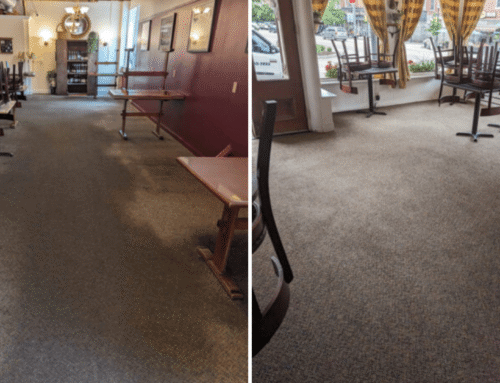
- Cleaner appearance with less wick-back
- No sticky residue left behind
- Faster dry times
- Improved long-term soil resistance
This process is why encapsulation is so effective in commercial maintenance programs, where carpets are cleaned frequently and appearance consistency matters more than deep flushing.
Using Encapsulation Detergents Strategically
Encapsulation detergents are not interchangeable. Formulation matters, especially when you're dealing with different soil loads, odors, and environmental requirements.
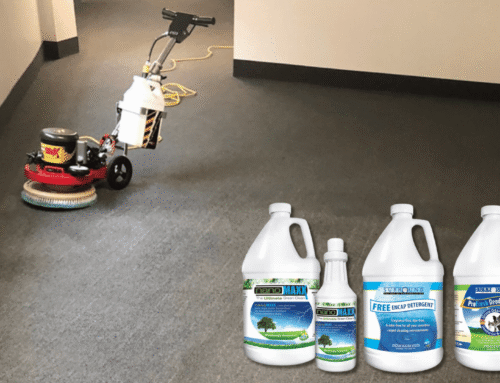
Below are three of our best encap detergents that illustrate how chemistry supports different cleaning scenarios.
Surround OMEGA Citrus: Encapsulation for Greasy, High-Soil Environments
Not all encapsulation jobs fall into light or routine maintenance. Some environments—such as apartments, restaurants, and mixed-use commercial spaces—present heavier soil loads, including oils, food residue, and recurring odor issues. Surround OMEGA Citrus is formulated for these conditions while remaining suitable for broader maintenance use.
OMEGA is a neutral pH encapsulation detergent (6.5–7.5 in dilution), making it safe for carpet, upholstery, and even many natural fibers when properly tested. It uses Bonnet Pro's T2H hybrid polymer technology, which encapsulates soil without creating brittle residue or leaving carpets stiff or "crunchy" after drying. This allows soils to release slowly during vacuuming without contributing to rapid re-soiling or crystalizing encap dust like our competitors use..
Because of its ability to address greasy and heavily impacted soils, OMEGA is commonly used in:
- Restaurants and food service areas
- Apartment turnovers
- High-traffic commercial carpet
- Residential carpets with recurring soil or odor issues
The formula includes AFT (Advanced Fiber Technology), which helps limit soil bonding over time. In maintenance programs, this means carpets often become easier to clean with repeated service rather than progressively harder, as can happen with residue-heavy chemistries.
Revive iT Rocket Citrus Oxy Encap: Encapsulation for Organic Stains and Seasonal Soil and Everyday Cleaning
Some carpet conditions benefit from more than standard encapsulation alone. Revive iT Rocket Citrus Oxy Encap is designed for situations where organic staining, oxidizable soils, or seasonal contamination are present, while still functioning within an encapsulation-based workflow.
Rocket combines a premium blended hydrogen peroxide, citrus solvents, and encapsulating polymers into a low-moisture compatible formulation. It uses Bonnet Pro's newer T3H dustless polymer technology, allowing soils to dry and vacuum out without creating brittle residue or post-cleaning stiffness. The formula also incorporates AFT (Advanced Fiber Technology), which helps reduce soil attachment over time in maintenance programs.
This product is commonly used for:
- Organic stains and food-related spills
- Carpets affected by body oils or organic residue
- Winter traffic lanes impacted by ice melt and deicing salts
- Apartments, commercial corridors, and shared spaces with visible discoloration
Rocket is effective on dry, oily, and organic soils, making it a practical choice when carpets appear clean structurally but show staining or discoloration that standard encap detergents may not fully address.
Plant-Based nanoMAXX: Encap Performance with Environmental Sensitivity
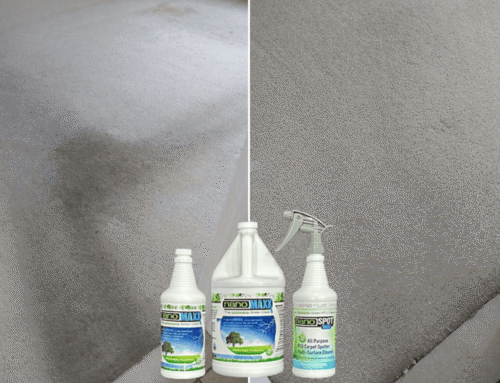
Some cleaning environments place limits on chemistry rather than cleaning method. The plant-based nanoMAXX formulation is designed for situations where fiber safety, occupant sensitivity, and material compatibility are primary concerns.And of course nano provides word class cleaning power that out performs most synthetic chemicals in the world markedplace.
nanoMAXX is a non-ionic, plant-based encapsulation solution with a neutral pH in dilution (7–8), making it suitable for all carpet fibers, including wool and stain-resistant materials. Its formulation allows it to be used in low-moisture encapsulation cleaning as well as extraction pre-spray applications, depending on the level of soil and the cleaning objective.
The product includes encapsulating polymers and AFT (Advanced Fiber Technology), which helps limit soil attachment and supports easier follow-up maintenance. Because it dries without leaving sticky residue, it is commonly used in maintenance programs where carpets are cleaned regularly and vacuumed frequently.
Typical use cases include:
- Healthcare and educational facilities
- Offices and commercial spaces with indoor air quality considerations
- Buildings following green cleaning guidelines
- Maintenance programs requiring compatibility across multiple cleaning methods
- Any place that has tough hydrocarbons (oils) that need to be removed.
nanoMAXX is often selected when cleaners need one product that can function across encap and extraction workflows without introducing aggressive chemistry or specialty restrictions.
When Hot Water Extraction Still Makes Sense
While encapsulation has become the preferred method for many maintenance programs, hot water extraction still plays an important role in professional carpet care. HWE is most appropriate when carpets require a corrective or restorative reset rather than appearance management.
Extraction is typically the better choice when:
- Carpets have been severely neglected
- There is widespread greasy or impacted soil across large areas
- Organic contamination or flooding has occurred
- A facility is transitioning from infrequent cleaning to a structured maintenance program
In these situations, the goal is not just surface improvement but removal of accumulated residue and contamination from deep within the carpet.
What is often overlooked in the encapsulation carpet cleaning vs extraction discussion is that the chemistry does not have to change when the method does. Bonnet Pro encapsulation products are designed to function effectively as pre-sprays for hot water extraction, helping cleaners maintain consistency in soil suspension, fiber safety, and residue control across methods.
Using the same products across low-moisture and extraction workflows allows professionals to:
- Pre-condition heavy soil before extraction
- Improve rinse efficiency
- Reduce sticky residues that can contribute to rapid re-soiling
- Transition more easily from restorative cleaning to ongoing encap maintenance
In many professional programs, hot water extraction is used periodically to reset the carpet, followed by encapsulation for routine service. This approach balances deep cleaning with efficiency—reducing labor, minimizing downtime, and helping carpets maintain a cleaner appearance between extraction cycles.
Rather than viewing encapsulation and hot water extraction as competing methods, experienced cleaners treat them as complementary tools, choosing the method—and application style—that best fits the condition of the carpet and the long-term maintenance plan.
Choosing the Right Method—and the Right Chemistry
The encapsulation carpet cleaning vs extraction debate becomes much clearer when you stop thinking in absolutes.
Encapsulation is not a replacement for extraction. It is a strategic tool that:
- Reduces moisture
- Improves appearance consistency
- Supports long-term carpet care
Extraction is not outdated. It is simply best reserved for specific conditions.
The real advantage comes from understanding how modern encap detergents are engineered and applying them intentionally:
- Maintenance encap for consistency
- Oxy and solvent-boosted encap for heavier soil
- Plant-based options for sensitive environments
When used correctly, encapsulation becomes more than a faster method—it becomes the foundation of a smarter cleaning program.
Choosing Encapsulation Cleaning Products for Ongoing Commercial Use
Encapsulation systems only perform as well as the chemistry behind them. In commercial environments, that chemistry needs to support consistent soil release, residue control, and repeatable results—not introduce new variables from job to job.
Bonnet Pro's encapsulation line is developed specifically for these maintenance-driven environments. Our products are designed to work together across routine cleaning, problem-solving situations, and periodic restorative work. The line includes:
- Pure encapsulation detergents for ongoing maintenance
- Oxy and enzyme-enhanced options for organic soils and heavy traffic areas
- Plant-based and neutral pH formulas for sensitive environments
- Supporting spotters and additives that remain compatible across methods
Whether you're maintaining large commercial facilities, managing apartment turnovers, or addressing high-traffic corridors, using a unified encapsulation system helps reduce residue, improve predictability, and simplify your chemical lineup.
If encapsulation is part of your regular commercial cleaning program, explore Bonnet Pro's full line of professional encapsulation detergents and supporting products—built to support low-moisture cleaning, reduce guesswork, and deliver consistent results over time.