
Finding the best professional carpet spotters isn't about chasing the strongest chemical or the fastest promise. It's about knowing what type of spot or stain you're dealing with, how that spot or stain behaves in carpet fibers, and which professional carpet spotter is designed to remove it safely and effectively. A spot is a substance like oil on the carpet. A stain is a addition or subtraction of color like wine, urine or bleach.
In a real carpet cleaning operation—whether you're running hot water extraction (HWE), low-moisture encapsulation, or a combination of both—spotting mistakes can cost you time, damaged carpet, or leave behind residue that leads to rapid re-soiling or poor results creating unhappy customers and call backs. That's why professional cleaners don't rely on a single spotter. They rely on a system.
In this guide, we'll break down:
- What actually makes a carpet spotter "professional"
- How to choose the right professional carpet spotter for each stain type
- Which spotters work best as a carpet spotter for HWE versus low-moisture systems
- Common mistakes cleaners make—and how to avoid them
Whether you're building your first spotting kit or refining an advanced setup, this article will help you understand how the best professional carpet spotters can make your job easier.
What Makes the Best Professional Carpet Spotters Truly "Professional"
Not all spotters are created equal or serve the same purpose. What separates the best professional carpet spotters from consumer-grade products is not just strength—it's control, safety, and predictability in real cleaning conditions.
Professional cleaners need spotters that work with carpet fibers, backing materials, and cleaning systems—not against them.
Here's what actually matters.
Designed for Specific Stain Types (Not Guesswork)
A true professional carpet spotter is formulated for a specific category of stains, such as:
- Organic odors and urine
- Rust and mineral stains
- Ink and dyes
- Grease, paint, and petroleum-based soils
Trying to remove everything with one general-purpose product often leads to frustration possible damage liKe delamination, stain spreading, or setting the stain permanently. The best professional systems use targeted chemistry, applying the mildest effective solution first and escalating only when necessary.
This approach protects:
- Carpet fibers
- Latex backing
- Indoor air quality
- Your reputation as a cleaner
Compatible with Hot Water Extraction and Low-Moisture Systems
A professional spotter should perform reliably whether you're using:
- Hot water extraction (HWE)
- Encapsulation / low-moisture cleaning
- Bonnet or pad cleaning
That's why compatibility matters. A high-quality carpet spotter for HWE must rinse cleanly, avoid residue, and not interfere with downstream extraction or encapsulation chemistry.
Safety Over Speed (Without Sacrificing Results)
The strongest chemical isn't always the best solution.
Some aggressive spotters may work fast—but at the cost of:
- Color loss
- Fiber degradation or rapid resoiling
- Delamination of carpet backing
Professional spotters prioritize controlled reaction speed. For example:
- Slower-acting rust removers that are safer on fibers
- Solvents that must be applied dry and rinsed correctly
- Enzymes that require moisture and dwell time to work properly
This gives the technician time to manage the correction, rather than reacting to unintended damage.
Organic Odors and Urine: Enzymatic Spotters That Actually Work
Organic odors—especially urine—are one of the most common reasons customers call a professional cleaner. They're also one of the easiest problems to mishandle if the wrong product or process is used. When evaluating the best professional carpet spotters, enzymatic odor control is not optional—it's foundational.
WasteAway: Targeted Enzymatic Odor Removal
WasteAway odor remover is designed specifically for urine and organic odor treatment in professional carpet cleaning applications.
Key characteristics:
- Enzymatic formula for urine, urea salts and organic matter
- Designed to penetrate, break down with proper dwell time
- Safe when used correctly on carpet fibers
How professionals use it:
- Treats one to two normal urine spots per 16 oz bottle
- Applied as a dose, not a light mist
- Poured directly onto the affected area
- Left wet for extended dwell time.
A critical rule with enzymes: if an enzyme dries, it dies. Keeping the treated area wet allows the enzymes to continue breaking down urine salts and organic residues, which is what permanently removes odor rather than temporarily masking it. This could be as long as long as 24 hrs.
Rust and Mineral Stains: Safe Removal Without Fiber Damage
Rust and mineral stains are some of the most intimidating challenges for carpet cleaners. They often appear suddenly, set quickly, and can worsen if treated with the wrong chemistry. When evaluating the best professional carpet spotters, a dedicated rust remover is essential—but it must be used correctly.
Why Rust Stains Require a Specialized Spotter
Rust stains are caused by oxidation from metal particles reacting with moisture. These stains:
- Cannot be removed with alkaline cleaners
- Will not respond to enzymes or detergents
- Can permanently discolor fibers if mishandled
A professional rust remover works by reducing and dissolving iron oxides, not by scrubbing them away.
Professional Rust Remover: Controlled, Safer Chemistry
Bonnet Pro's Surround Rust Remover is designed to work slower but safer than more aggressive acid-based alternatives.
Why this matters:
- Slower reaction reduces the risk of color loss
- Safer for nylon and common commercial fibers
- Allows technicians to control the process
How professionals use it:
- Apply enough product to fully cover the rust stain
- Allow it to dwell and break down the rust. Gentle agitation can be helpful
- Avoid aggressive agitation to prevent fiber distortion
- Extract whenever possible for best results
While some rust stains can be bonnet-cleaned, hot water extraction is usually the most effective method, especially when dealing with heavier deposits.
The Importance of Neutralization After Rust Removal
Because rust removers are acidic, they must be neutralized after use. Skipping this step can lead to:
- Fiber damage over time
- Residue that attracts soil
- Inconsistent cleaning results
This is where a no-rinse encapsulating spotter plays a critical role.
After rust removal:
- Apply a no-rinse spotter to flush remaining residue
- Neutralize the acid safely
- Prepare the area for extraction or drying
For professionals using a carpet spotter for HWE, this step is especially important to ensure clean rinsing and long-term carpet stability.
Ink Stains: Precision Spotting Without Spreading the Problem
Ink stains are a perfect example of why the best professional carpet spotters are about technique as much as chemistry. Ink behaves differently depending on its formulation, and one wrong move—usually adding water too soon—can turn a small spot into a much larger issue.
Why Ink Requires a System, not a Single Product
Ink is rarely a single dye. Many inks are blended formulations, meaning some components release easily while others resist removal. This is why ink spotting often progresses in stages rather than all at once.
Professional success depends on:
- Preventing migration
- Breaking down ink in a controlled way
- Escalating chemistry only when needed
Step One: Use No-Rinse Encap Spotter to Create a "Moat"
Before working directly on the ink, professionals use No-Rinse Encap Spotter to create a protective barrier around the stain.
Why this matters:
- Ink naturally wants to spread once it begins to release
- The no-rinse spotter forms a controlled perimeter
- This "moat" keeps loosened ink from bleeding into clean carpet
The spotter is applied around the stain—not directly on it—so the ink stays contained as removal begins.
Step Two: Apply Surround Gum, Grease & Ink (Gel) on the Stain or nanoMAXX APEX
Once the perimeter is protected, Surround Gum, Grease & Ink is applied directly to the ink.
Because it's a thick or gelled formula, it:
- Stays where it's placed
- Reduces the risk of over-wetting
- Allows longer dwell time on the ink itself
This makes it especially useful when working on delicate fibers or areas where backing integrity is a concern.
Best practice:
- Apply generously according to the size of the spot, don't soak
- Tamp gently rather than scrub
- Blot or dry extract as ink releases
- Use dry extraction strokes and repeat the above steps
- Avoid introducing water too early in the final rinse
- Revive iT Oxy Spotter may help remove any remaining light discolorations.
Paint, Oil, and Grease: When Strong Solvents Are Necessary
Paint, oil, and grease stains require a different approach than organic or dye-based spots. These are petroleum-based soils, and they won't respond to enzymes, detergents, or oxidation alone. This is where a targeted solvent earns its place among the best professional carpet spotters.
Paint, Oil & Grease Remover (P): Use with Control
Surround P.O.G is very aggressive and should be used carefully.
Key rules:
- Apply only to dry carpet
- Put the product on a towel or cotton swab — not directly on the carpet
- Solvents will damage carpet backing!
- Dab gently while wearing gloves
- Never flood the area!
- Solvents are petroleum based so use Surround No Rinse Spotter
- After the solvent and before rinsing.
On most machine made carpets, solvents can soften or break down latex backing, leading to delamination. Precision matters more than speed.
Always Rinse After Solvent Use
Because this product is petroleum-based, it must be rinsed out after use. A No-Rinse Encap Spotter is used to flush residue and stabilize the area before extraction or drying.
Used correctly, solvent spotters solve stains that nothing else will — without damaging the carpet.
Red Dye Stains: Removing Red 40 Without Setting the Stain
Red dye stains from food, drinks, candy, and medications are some of the most frustrating spots professionals face. These dyes are designed to be colorfast, which is why they require a dedicated solution to qualify among the best professional carpet spotters.
Surround Bye Bye Red Dye Carpet Stain Remover
Surround Bye Bye Red Dye is formulated specifically to remove Red 40 and similar synthetic food dyes.
How professionals use it:
- Apply directly to the stain
- Allow short dwell time
If the stain is fresh (under 24 hours), it may release without heat.
When Heat Is Needed
For older or set stains:
- Lightly dampen a cotton towel
- Place it over the treated area
- Use a steam iron on the lowest setting that produces steam
- Higher settings can set the color
- Apply firm pressure for 20–30 seconds at a time
Heat transfers the dye from the carpet into the towel. Too much heat can set the stain, so controlled applications are critical.
Finishing the Process
After dye transfer:
- Extract or blot remaining discoloration
- Minor color shift is normal and correctable
This method allows professionals to remove red dye stains that would otherwise be permanent.
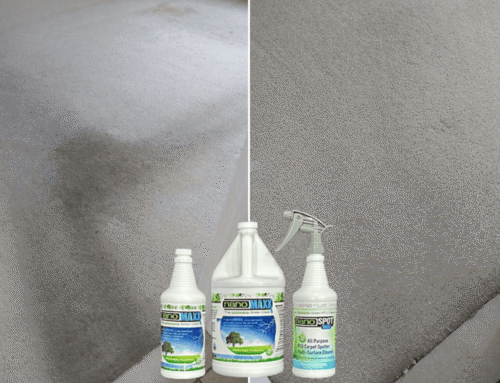
NanoSPOTMAXX: A Safe, General-Purpose Professional Spotter
Not every stain fits neatly into a single category. When cleaners need a safe, versatile solution for light spotting and surface cleaning, NanoSPOTMAXX fills that role within the lineup of the best professional carpet spotters.
What NanoSPOTMAXX Is Best Used For
NanoSPOTMAXX is a general-purpose, zero health-rated spotter designed for:
- Can be used on any wet cleanable surface, from car wheels to carpet!
- General spot and spill cleanup
- Maintenance spotting between full cleanings
- Situations where safety and versatility matter
It can be used on carpets and a variety of other surfaces, making it a practical choice for technicians who need one dependable product for everyday use.
Professional Carpet Spotters Every Cleaner Should Carry
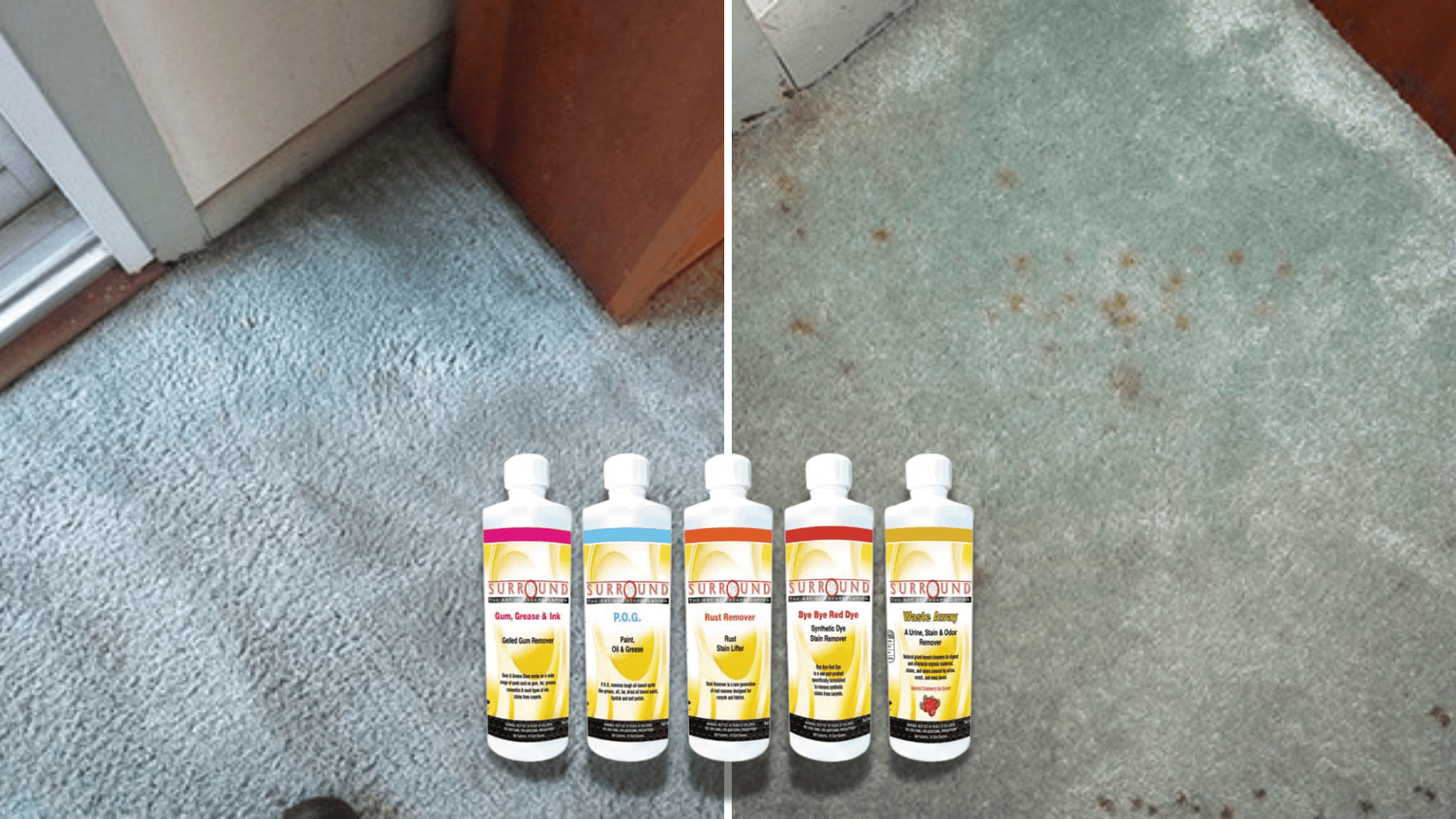
- WasteAway Spotter – Enzymatic spotter for urine, pet accidents, and organic odors; breaks down urine salts with proper dwell time
- NanoSPOTMAXX – General-purpose, zero health-rated professional spotter for light organic stains and everyday spotting
- Surround No-Rinse Encap Spotter – Ideal for ink removal support, filtration lines, petroleum residues, and neutralizing acidic spotters; excellent as a carpet spotter for HWE
- Surround Gum, Grease & Ink Remover – Gel-based spotter for ink, gum, and greasy residues; stays in place and reduces over-wetting
- Surround Paint, Oil & Grease Remover (P) – Aggressive solvent spotter for paint, oil, and petroleum-based stains; apply dry and rinse thoroughly
- Surround Bye Bye Red Dye Carpet Stain Remover – Specialty remover for Red 40 and food dyes; works with or without heat depending on stain age
- Surround Rust Remover – Acidic spotter for rust and mineral stains; slower-acting and safer, followed by neutralization
Build a Complete Professional Spotting System
The best results don't come from a single product — they come from using the right professional carpet spotter for the right stain, in the right order.
If you want a complete, field-tested solution that covers nearly every spotting challenge you'll encounter in residential or commercial work, explore Bonnet Pro's professional carpet cleaning solutions.
All-in-One Professional Spotting Kit
Our All-in-one Professional Spotting Kit includes the core spotters professionals rely on every day — available as a complete system or individual products.
Built by cleaners. Used by professionals. Designed to help you solve stains confidently and correctly.