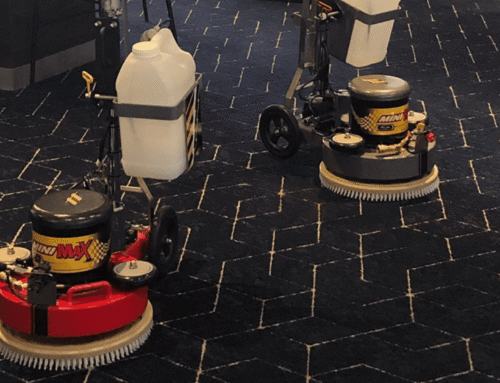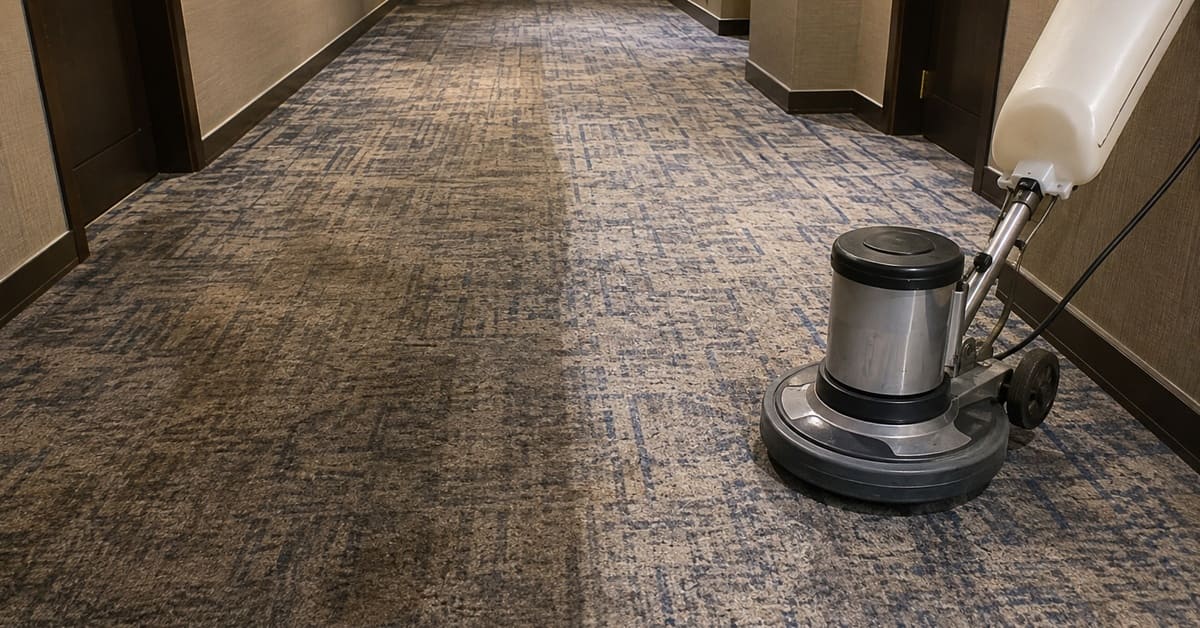
The best encapsulation chemical for high traffic low pile carpet isn’t automatically the same product you’d reach for on cut-pile residential carpet, even if both jobs are technically “high traffic.” Fiber height changes how encapsulation crystals form, sit, and release from the carpet — and low-pile construction is exactly where that difference shows up most in your results.
Low-pile and loop-pile carpet dominates the environments where high-traffic re-soiling is worst: offices, hotel corridors, retail floors, commercial glue-down installations. Getting the chemistry right here matters more than in almost any other setting you’ll clean.
Why Low Pile Height Changes Which Encapsulation Chemical Works Best
Low-pile carpet responds differently to encapsulation because there’s less fiber mass for crystallized soil to hide in, which means residue and under-rinsed polymer show up faster and more visibly than on deeper cut-pile carpet. On a plush residential pile, a slightly heavier detergent application can bury itself in the fiber structure without much visual consequence. On a low-pile commercial loop, the same overapplication sits closer to the surface — you’ll see crunchy residue, dulling, or a hazy film far sooner.
That’s the core reason the best encapsulation chemical for high traffic low pile carpet needs to be a genuinely low-residue, non-crystallizing-dust free formula rather than whatever general-purpose encap detergent is already on the truck. Loop and low-pile fibers also tend to be tighter-woven and more resistant to crushing, which is good for wear but means soil sits more exposed on the fiber surface — encapsulation crystals have less depth to bind into before vacuum extraction, so a formula with strong film forming formation and clean release matters more here than it does on carpet with more pile depth to work with.
Wicking Risk Is Higher on Low Pile, Especially Glue-Down Installations
Wicking — where soil trapped near the backing resurfaces after cleaning — shows up faster on low-pile and glue-down commercial carpet because there’s less pile depth separating the backing from the surface. A formula without strong anti-wicking chemistry will show recurring spots in these installations within days, not weeks, which is a much faster callback cycle than you’d see on a deeper residential pile carrying the same soil load.
What to Look for in an Encapsulation Chemical for This Job
The right formula for high-traffic low-pile carpet needs three things: low residue so buildup doesn’t show on short fiber, strong anti-wicking performance for glue-down and loop constructions, and enough concentration to handle commercial soil load without over-wetting a thin pile. Surround Ultra is built around exactly this combination — a double-strength encapsulation detergent with T2H Hybrid Polymer Technology specifically engineered to resist wicking, which is the failure mode that shows up fastest on low-pile commercial installations.
When Omega Citrus Is the Better Call Instead
For low-pile carpet in genuinely greasy commercial environments — restaurant entries, food-service corridors — Surround Omega Citrus is the stronger pick. Its neutral pH and AFT-equipped T2H polymer system are built to cut through grease and heavy organic soil, and it carries the same no-rapid-re-soiling, anti-wicking performance as Ultra — the real difference between the two is soil type, not wicking protection. If the job is mostly foot-traffic soil on tight-woven commercial pile, Ultra’s double-strength formula is the better default. If it’s a grease-and-organic-soil environment on that same low-pile construction, Omega Citrus takes over. For the broader picture of why high-traffic carpet re-soils in the first place, see How to Prevent High Traffic Carpet Re-Soiling.
According to the Carpet and Rug Institute, low-pile and loop-pile constructions are the standard specification for commercial high-traffic environments precisely because of their crush resistance and easier maintenance profile compared to deeper cut-pile — which is exactly why getting the cleaning chemistry right on this carpet type matters at scale.
Frequently Asked Questions
Does encapsulation work as well on low pile carpet as cut pile?
Yes, and often better for maintenance purposes — low-pile carpet’s tighter construction actually makes soil easier for encapsulation crystals to reach and release, provided the formula is low-residue enough not to show buildup on the shorter fiber.
How often should high traffic low pile commercial carpet be cleaned?
Most commercial low-pile installations on a maintenance program are cleaned every four to six weeks, though entryways and the heaviest-traffic corridors may need more frequent attention regardless of chemistry used.
Can the wrong encapsulation chemical damage low pile carpet?
A high-residue or poorly-rinsing formula won’t typically damage low-pile fiber structurally, but it will show visible dulling, crunchiness, or wicking far faster than on deeper pile, making product choice more consequential on this carpet type.
Getting the Chemistry Right for the Carpet in Front of You
The best encapsulation chemical for high traffic low pile carpet comes down to matching the formula to what that fiber construction actually does under soil load — low residue, strong anti-wicking performance, and the right concentration for the soil type you’re facing. Surround Ultra and Surround Omega Citrus cover the two most common scenarios on this carpet type, and picking correctly the first time is what keeps a commercial maintenance account from turning into a callback.